
Wow, what a week. We will delve into post-election analysis in next week’s podcast episode, so mark your calendars for that conversation. In the meantime, I’m ready for some cozy time this weekend. After I participate in a 60-mile ride, that is. (Wish me luck.)
This week’s must read: Conservative climate group faces a midterm reckoning. Its Utah founder still sees hope for the movement (Deseret News)
This article on the fate of the House Conservative Climate Caucus feels timely given what we know now that we did not know on Monday when it was published. With caucus leaders Reps. Mariannette Miller-Meeks and Jen Kiggans losing their races and about a third of the membership not returning next year, some of us are wondering about the fate of right-of-center climate actions.
“A demand for affordable energy, reliable energy, and clean energy are all coming together,” Senator John Curtis, who founded the caucus when he was in the House, said to the Deseret News. “I think that’s merging to both sides caring about all three of those things.”
Noting that he hails from a “red, red, red, red state” and still won his races, Curtis affirmed “You can be a Republican, you can talk about this issue and do it in a way that actually has the support of a red constituency.”
After the election, he wrote that in 2027 it will be “more important than ever to put petty partisan politics aside and come together to solve the pressing issues the American people have begged us to address.”
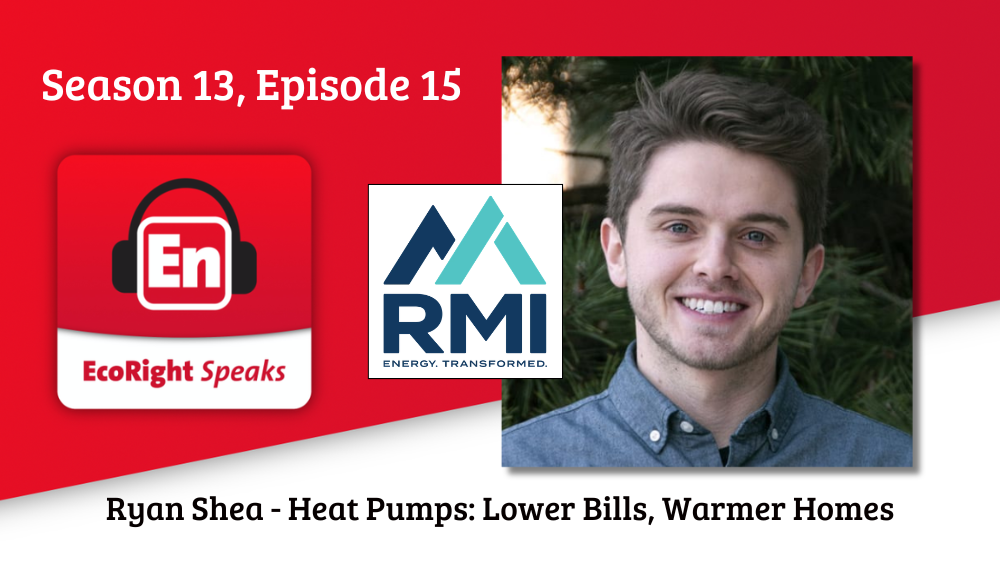
Heat pumps make heating your home more affordable and are good for the environment!
Energy affordability is a hot topic of late, which is why recent analysis on heat pumps caught my eye. This established technology, like geothermal, is having a renaissance, especially with findings that they can indeed perform well in cold climates, making way to replace costly propane and home heating oil systems in places like New England. Here to give us heat pumps 101 and talk about the prospects for reducing energy bills and carbon emissions is RMI’s Ryan Shea.
Ryan is a manager in the Carbon-Free Buildings team, where he works to accelerate home decarbonization. He focuses on developing tools and resources for program implementers, contractors, and residents to leverage when solarizing, electrifying, and weatherizing homes. Ryan has experience with techno-economic analyses for holistic decarbonization of island settings, universities, houses of worship, and individual residences through large and small-scale renewable energy, building electrification and efficiency, and transportation electrification. A Fulbright scholar, Ryan completed his graduate research on cost-effective pathways to fully electrify and renewably power university buildings and transportation systems, and provided roadmaps to 10 Bay Area houses of worship to cost-effectively reach carbon neutrality.
Whether you have a heat pump or have never heard of heat pumps or are somewhere in the middle, sit back and let Ryan tell you everything you need to know.
Coming up next week, veteran Hill staffer Alex Flint of Alliance for Market Solutions gives us the scoop on how he see the election impacting clean energy and climate work in the year ahead.
In the meantime, this was a fascinating article: If this was a data center election, data centers lost (Heatmap)
RIP William Nordhaus
Economist William Nordhaus, who conceived of the carbon tax as the best way to curb climate pollution while not stymying economic growth, died last week at the age of 85.
Under the current system whereby polluteres can burn fossil fuels for free, dumping pollution in the sky without paying what our own Bob Inglis calls a “tipping fee,” society bears the costs of climate impacts.
“The result is too much burning of fossil fuels, too much climate change, and too many harms to humans, wildlife, ecosystems, and more,” Dr. Nordhaus said in 2018. “Economic theory suggests that the best remedy for such externalities is a pollution charge — a charge on carbon emissions, or what is now called a carbon tax.”
The New Yorks Times notes that three Republican Treasury Secretaries—Henry Paulson, James Baker III, and George Shultz—all embraced the idea of a carbon tax as the simplest and economically most efficient way to limit CO2 emissions.

Special film screening & conversation
Join us for our special event, The [Conserv]atives: A Movie Screening and Conversation with Filmmaker Nadia Gill.
Watch the film on your own time, then join republicEn and filmmaker Nadia Gill to talk about the people in the film and the conversations you recognize. Bring a friend, bring your questions, and join us online Thursday, November 19.
Register here. After you register, you will get a link to pre-watch the film!
November 19th at 1:30 p.m. ET | 12:30 p.m. CT | 11:30 a.m. MT | 10:30 a.m. PT
See you next week, readers!