
I’m not gonna lie. I was surprised by these results.
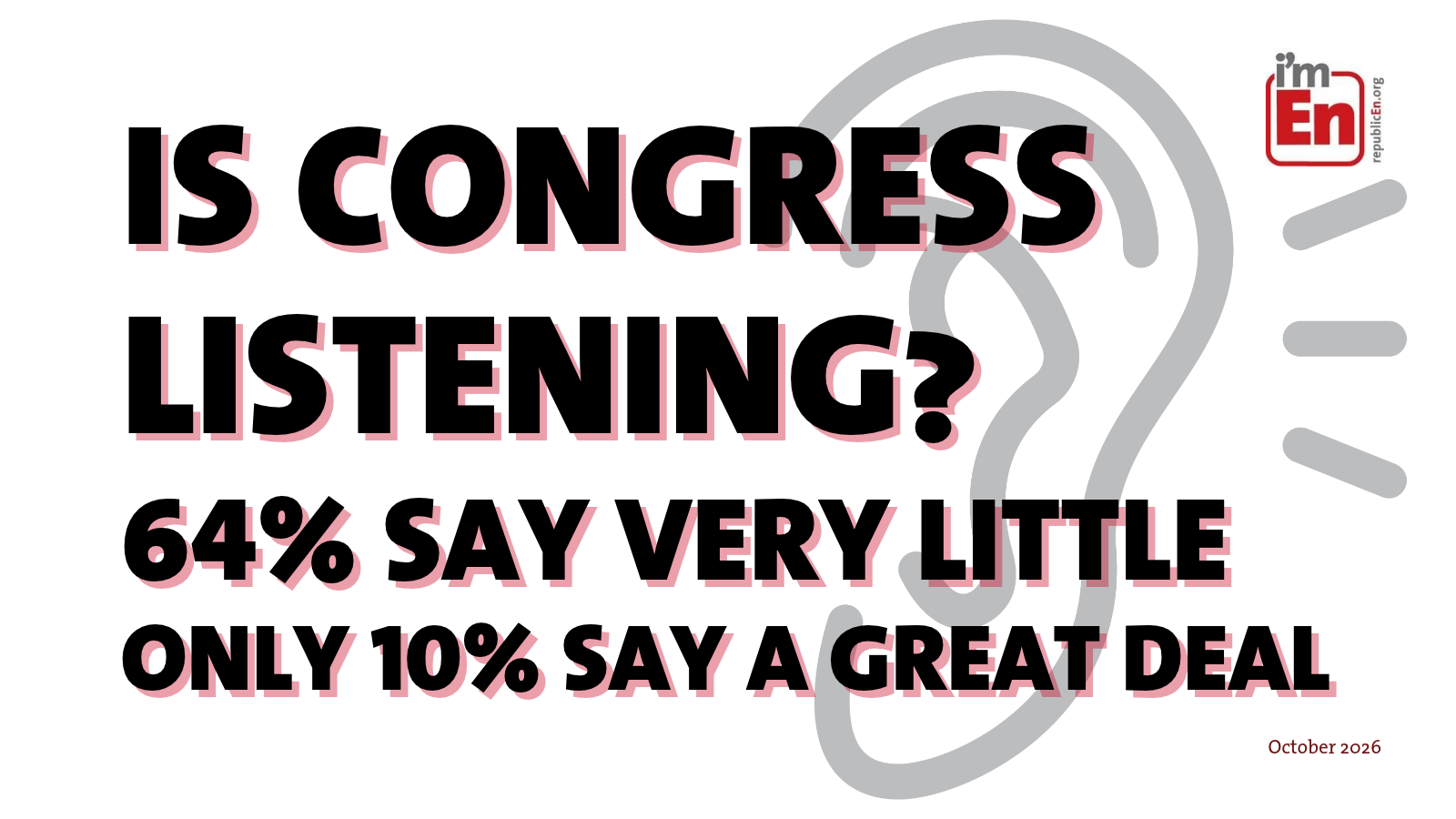
Nearly two-thirds of respondents said contacting Congress about climate and energy policy has very little impact or none at all.
Here’s the part I did not expect: Only 17% said none of our suggested actions appealed to them right now.
People feel discouraged. Some feel ignored. Yet most still want to do something.
Our latest Flash Poll asked republicEn community members how much impact congressional outreach has, whether lawmakers listen, and which actions feel worth their time.
Little faith in hitting send
We asked, “How much impact do you think contacting your members of Congress about climate and energy policy has right now?”
-
-
- 46% said “Very little”
- 24% said “Some”
- 17% said “None”
- 10% said “A great deal,” and
- 2% were unsure.
-
Put those first two answers together, and 64% saw little or no impact.
The comments helped explain the frustration.
Bill S. from Texas has contacted Congress about climate since 2007. He wrote,
“The pain from beating my head against a stonewall got to be too much.”
Michael F. from California described sharing conservative ideas with his elected officials as “talking to the wall.”
A message needs somewhere to go
Our second question asked which statement came closest to each person’s view.
-
-
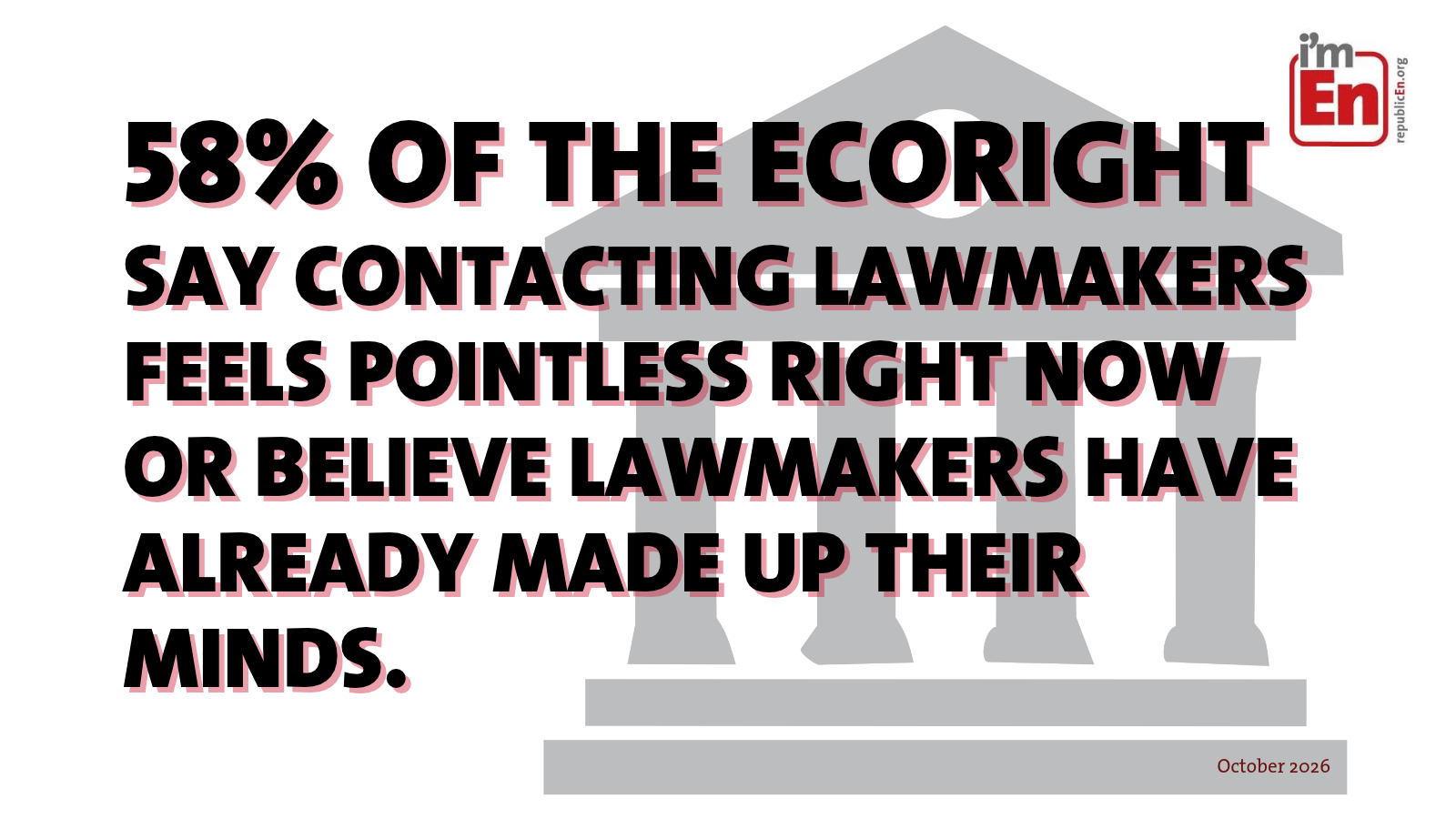
- 40% said, “The current political climate makes contacting them feel pointless.”
- 27% said, “They listen only when many constituents speak up.”
- 18% said, “They have already made up their minds.”
- 11% said, “My elected officials listen to constituent messages.”
- 4% said, “I’m unsure.”
-
The comments added more context.
Some respondents live in districts where lawmakers reject climate action. Others have representatives who already support it and see little reason to send another message asking for the same thing.
Dann S. from Virginia put it plainly:
“My elected officials in Congress are not among those ignoring or just allowing climate change. So to whom shall I write?”
Several respondents drew a line between a form letter and a personal message. They saw more value in sharing how climate and energy issues affect their families, communities, or local economies.
Others felt numbers still matter. They believed lawmakers pay more attention when many constituents speak up, even if one message feels easy to ignore.
Discouraged does not mean done
This result stood out most to me.
Despite low confidence in congressional outreach, 83% selected an action they would feel motivated to take through republicEn.
-
-
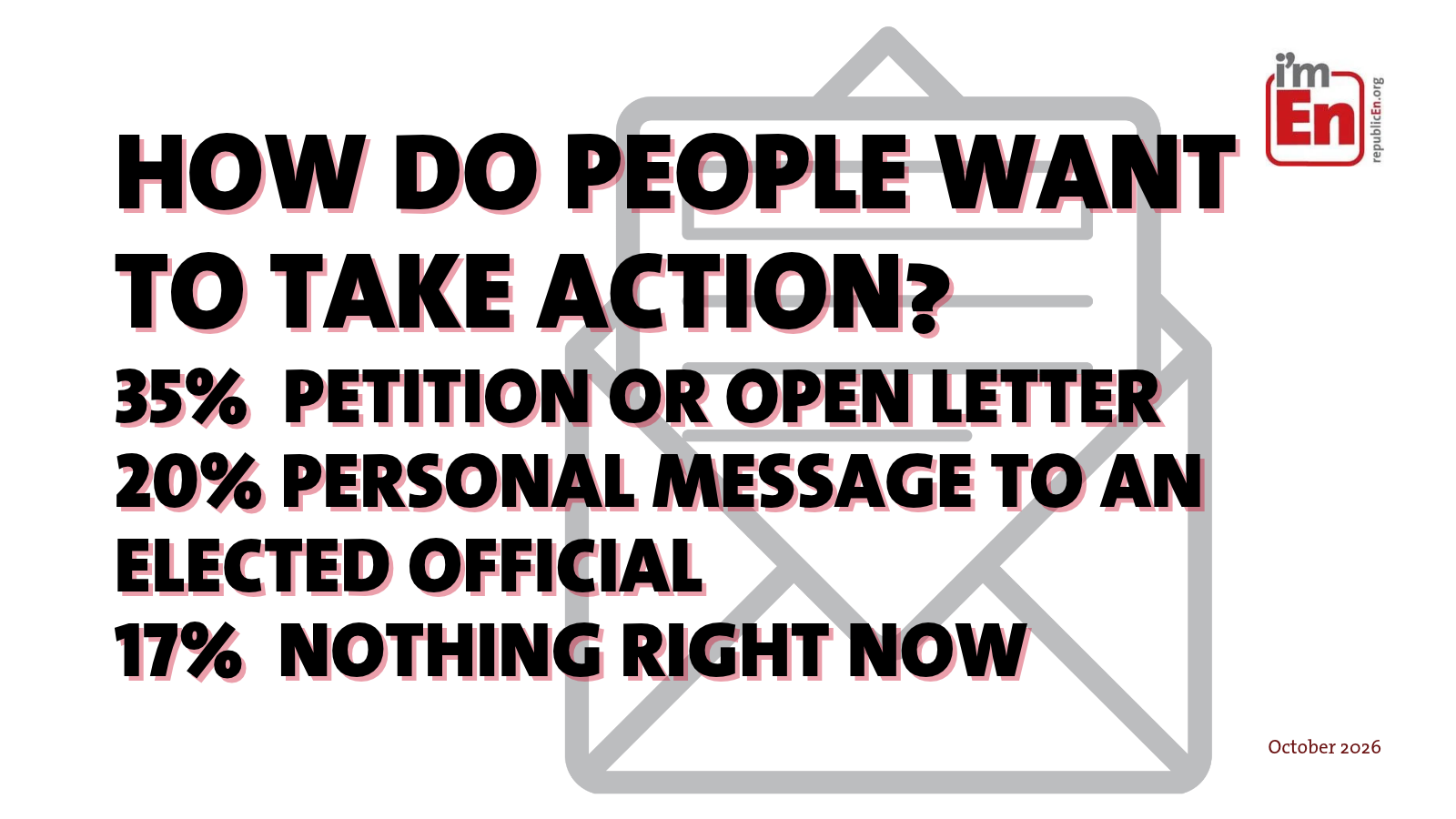
- 35% chose “Sign a petition or open letter.”
- 20% chose “Send a personal message to an elected official.”
- 17% chose “None of these right now.”
- 14% chose “Attend a local event or virtual discussion.”
- 8% chose “Call a congressional office.”
- 7% chose “Share information with friends or online.”
-
Only 17% chose “None of these right now.” Let that sink in.
Beth C. from North Carolina brought plenty of energy to her comment:
“I’ll do all of them! Let’s go!”
She also wanted more opportunities to meet other conservatives who care about climate. Several respondents shared her interest in community, local outreach, and conversations with people who share their values.
No single answer
The results do not offer one clear replacement for congressional letters.
Some respondents still value personal messages and calls. Others prefer petitions, public letters, events, education, conversations with friends, or local conservative outreach.
Eric Z. from Texas called for a “most of the above” approach. I think he captured where many responses landed. People differ on which action works best, but most still want a meaningful way to participate.
They also want to understand the purpose behind each request. Who needs to hear from them? Why does their response matter? Is this the right moment to speak up?
Those are fair questions. Asking people to take action should involve more than placing a button in an email and hoping they click it.
Where we go from here
These responses give our team plenty to think about.
We do not know yet what future opportunities will look like. Still, these results will become part of our internal conversations about how republicEn engages its community.
Most respondents have little faith in one message changing Congress. Yet most have not given up on action.
I found hope in this result. People feel tired, but they still care.
Thank you to everyone who took the poll and shared an honest comment. You gave us plenty to discuss.
Poll answers represent republicEn members across 41 states, plus Italy and Portugal. California had the most respondents, followed by a tie between Washington and North Carolina. Among respondents, 36% identified as center, 34% leaned right, 23% leaned left, and 7% were unsure or preferred not to say.
Four times a year, republicEn seeks understanding by listening to the voices of conservatives who care about climate change.