
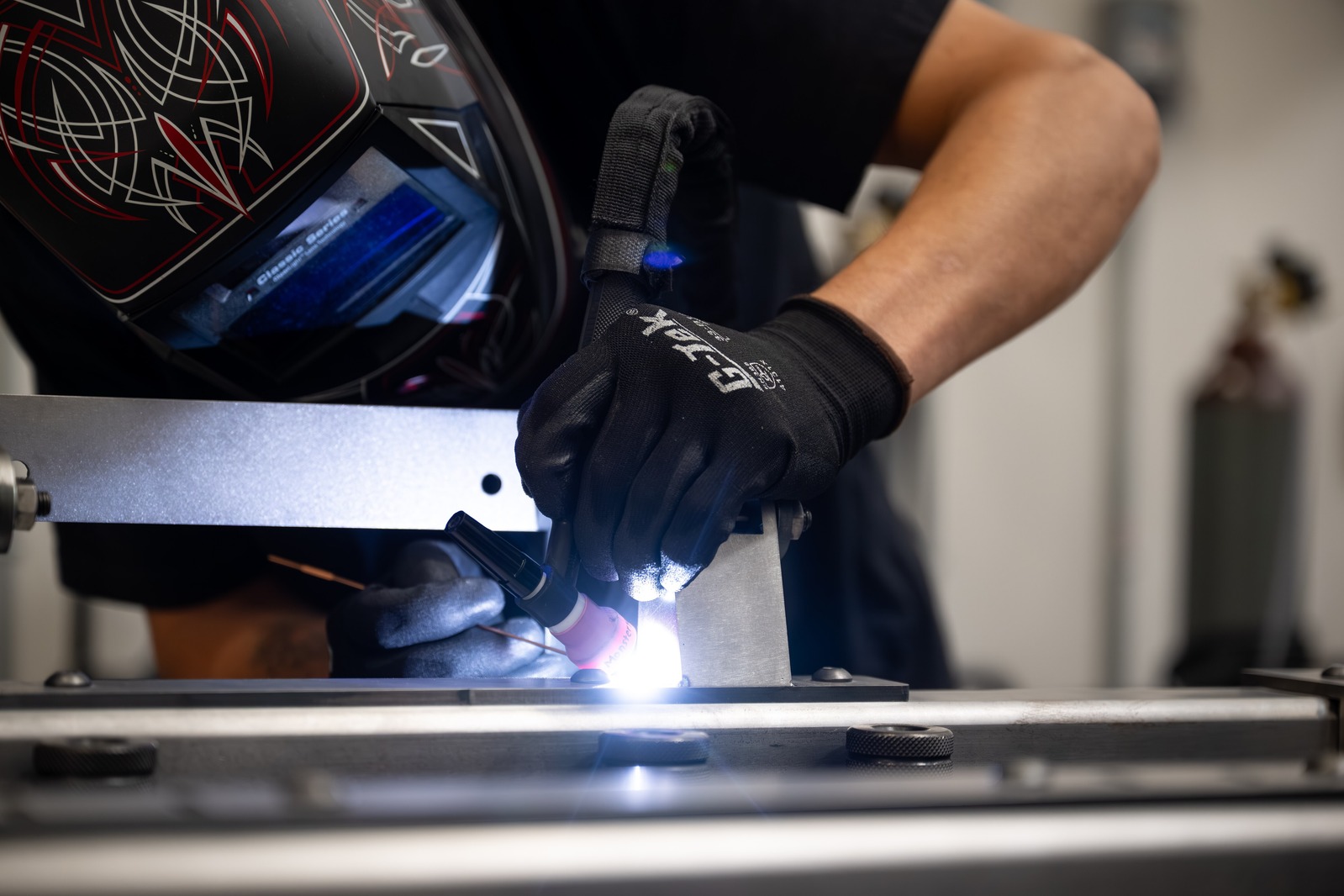
A Ford employee welds a vehicle component as the company invests in the next generation of American manufacturing and electric vehicles. Photo credit: Ford Motor Co.
When people think about electric vehicles, the conversation often centers on charging stations, battery range, or government policy.
Ford is thinking about something bigger: how to build the next generation of vehicles while keeping American manufacturing competitive.
That was the focus of republicEn’s latest EcoRight Webinar, where we welcomed Evan Belser, Deputy General Counsel at Ford Motor Company, for a conversation on innovation, competition with China, and the future of the American auto industry.
Watch the full webinar here:
One theme surfaced repeatedly throughout the discussion: the global auto industry is changing quickly, and competition is no longer just between automakers. It’s increasingly a competition between countries.
Belser described how Chinese manufacturers have benefited from years of industrial policy and have rapidly expanded their presence in electric vehicles around the world. Ford’s response is to invest in American manufacturing, battery production, and new vehicle platforms designed to lower costs while giving customers more choice.
Among the projects discussed was Ford’s next-generation electric vehicle platform, including a midsize electric pickup expected to start around $30,000. The vehicle will be assembled in Kentucky using batteries produced in Michigan, reflecting Ford’s emphasis on domestic manufacturing and supply chains.

A bright yellow BYD electric vehicle parked along a street in Mexico, illustrating the growing presence of Chinese electric vehicles in North America. Photo credit: Wen Lee
The conversation also explored the role of public policy. Rather than advocating for frequent policy shifts, Belser emphasized the importance of stable rules that allow manufacturers to make long-term investments. Ford has argued that consistent policies, combined with customer choice and market competition, provide a stronger foundation for innovation than constantly changing incentives.
One practical takeaway that stood out during the webinar involved home charging. As more Americans consider electric vehicles, Belser discussed Ford’s effort to simplify ownership by including home charger installation with qualifying vehicle purchases, helping reduce one of the barriers many first-time buyers face.
The discussion concluded with audience questions covering topics ranging from battery supply chains and trade policy to charging infrastructure and consumer adoption.