
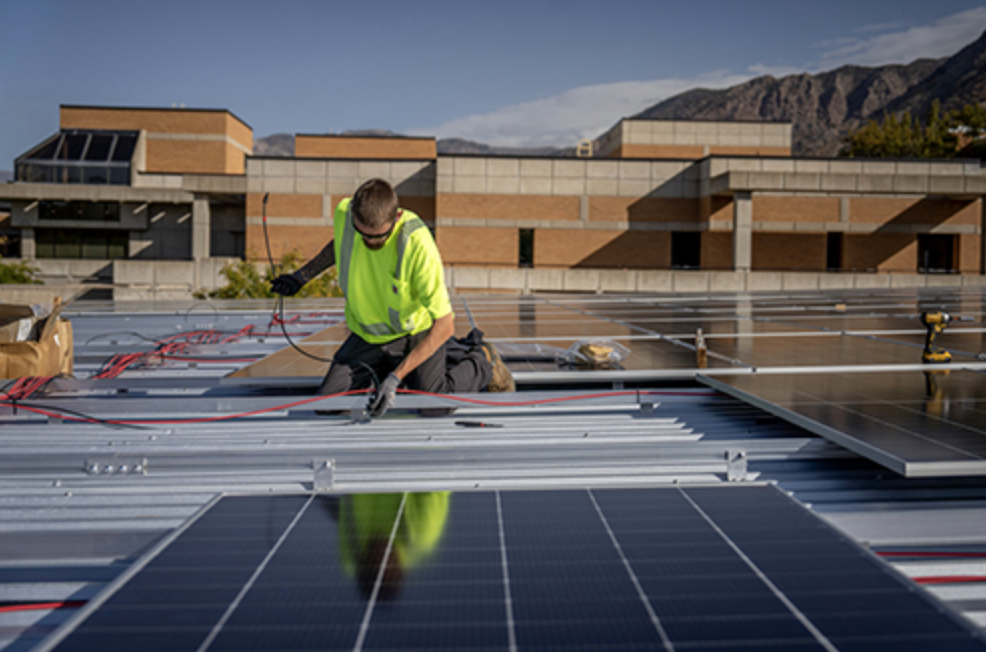
Hello all! Excited to be reaching you, as this is the first of many blog posts I will be writing for republicEn. As I balance my math and law classes with my exciting first week as an intern, my perspective as a college student feels increasingly relevant, which is what inspired today’s topic: a discussion of Weber State University in Utah.
A majority-conservative university in the conservative community of Ogden, Weber State has taken a unique approach to sustainability that closely mirrors a traditional EcoRight principle in financial policy. Back in 2007, the university signed the American Colleges and Universities Presidents’ Climate Commitment, pledging to be carbon neutral by 2050 and to develop its Climate Action Plan around the philosophy of “financial return-driven sustainability.” By staying committed to sustainable policies and energy development on campus, they have managed to push their projected date of carbon neutrality forward 10 years to 2040, been awarded the Excellence and Innovation Award for Sustainability and Sustainable Development from the American Association of State Colleges and Universities in 2023, and, most impressively as of 2024, saved 27.3 million dollars in utility costs since 2007.
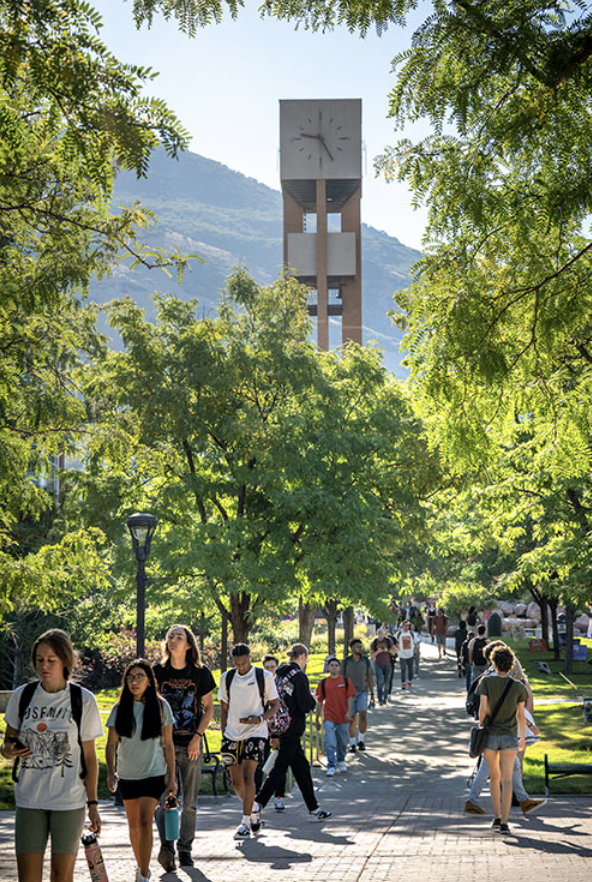
How has Weber State managed to achieve this striking level of climate excellence while adopting conservative economic strategies? Their innovative Revolving Loan Fund has been the true driving force. When a project, such as the installation of solar panels or geothermal heating (both successful developments on Weber’s campus), is proposed, a loan is taken from the fund to finance it. As the project’s clean, local energy sourcing saves money on utility costs, a return on investment is achieved, and the savings are used to pay off the initial loan and start a new project. While it often takes time for projects to recoup the original investment, the financial stability that green electricity projects provide makes the Revolving Loan Fund successful and worthwhile. This matters in terms of energy volatility, such as the closure of the Strait of Hormuz, because reducing reliance on fossil-fuel-powered energy also reduces economic instability in times of crisis, potentially affecting other, more oil-dependent universities.
Looking at the bigger picture, Weber State’s policies remind me that we don’t need a single tragic tipping point to drive change. Strategic planning and commitment to financial policies can make a significant difference. I also appreciate that Weber is committed to representing its conservative community by focusing on climate solutions rooted in conservatism. As a student passionate about this approach myself, I hope to see more universities take their financial policies into serious consideration when beginning the process of energy modernization, because Weber has proven that it can be not only sustainable for the environment but also for the institution’s financial future.
Our summer 2026 intern Livia Payne is a sophomore at Northeastern University in Boston, studying Political Science and Environmental Studies.
***Photos featured in this post came from the Weber State University website.