
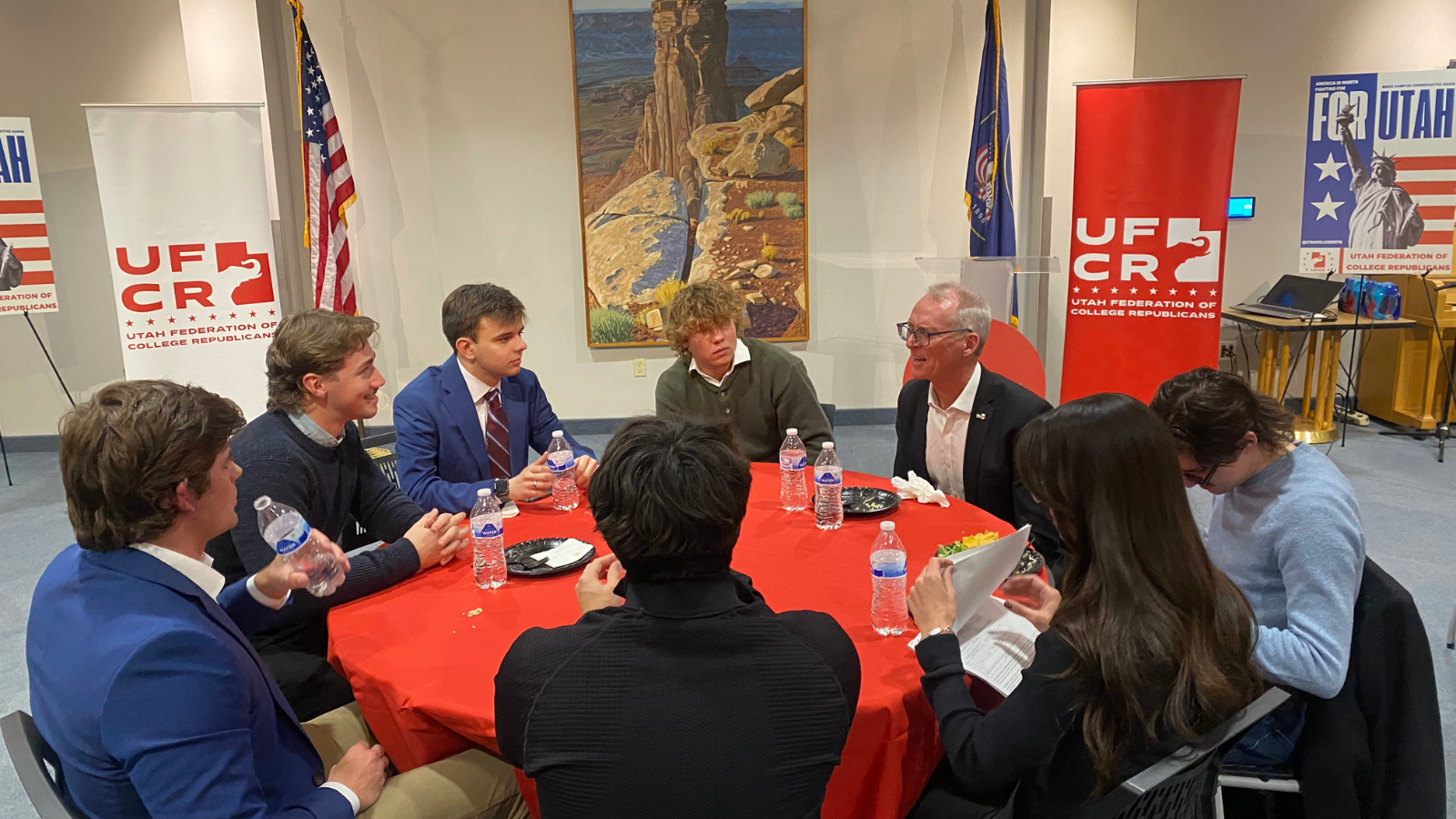
Bob Inglis, Executive Director at republicEn, engages in a roundtable conversation with members of the Utah Federation of College Republicans, December 5, 2025. Photo credit: Bill Barron.
Dear EcoRight Supporter,
We see opportunities in a changed political environment in 2026.
The midterms are coming. The generic ballot test favors Ds, and Rs are concerned. Those Rs are showing signs of reverting to the regular order of things—that is, looking out for their own states and districts rather than taking instructions from the White House. “Wag the Dog” moments may cause some rallying around the flag, but the narrative is tending toward the question of affordability.
In this, MAGA may meet its limits. We started to see those limits in the November 2025 elections, where Ds won in usual places like NYC and in unusual places like the Georgia Public Service Commission and in court retention votes in Pennsylvania—where Rs should have won.

Chelsea Henderson, Director of Editorial Content at republicEn, and Hattie Hobart, Chief of Staff at Nature Is Nonpartisan, in conversation with moderator Jesse J. Holland, Associate Director and Associate Professor at the School of Media and Public Affairs at George Washington University, during Respectful Differences at the 2025 Planet Forward Summit, April 17, 2025.
The Epstein matter continues to rile the MAGA base, and stalwarts like Marjorie Taylor Greene and Rep. Lauren Boebert (who had a water project vetoed by Trump) are speaking out about the one-way street of Trump loyalty. Republican senators are bluntly rejecting talk about a takeover of Greenland, and some have voted to constrain kinetic action in Venezuela.
If affordability is the dominant narrative, there’s a political trap in inflation news. Taming inflation means slowing the rate of price increase; it doesn’t mean that prices come down. As such, the politician who makes much of a promise to reduce inflation sets a trap for himself. Add to that the shock of increased health insurance premiums and the climate-related increase in homeowner’s insurance, especially in states like Florida, and some Rs may start looking for distance between themselves and the Trump Administration.
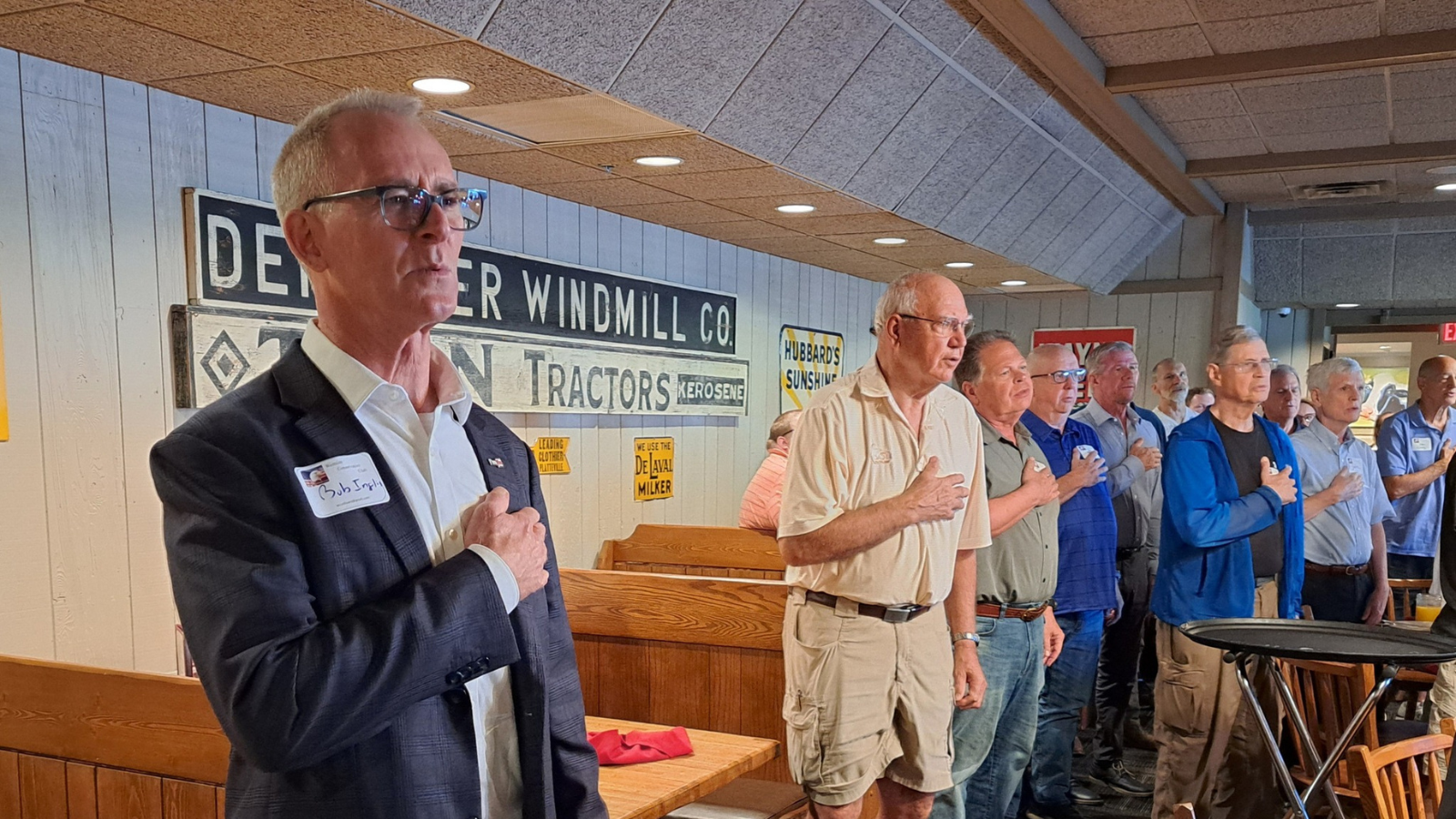
Bob Inglis joins members of Iowa’s Westside Conservative Club in the Pledge of Allegiance to open their July 23, 2025 meeting.
In 2025, clean energy incentives were washed away. President Trump went to the UN during NYC Climate Week in September to declare climate change a “hoax.” Republicans in Congress who care about climate were silent.
It’s going to take a lot to get Rs to speak up on climate, and we’re under no illusions as to the magnitude of the task ahead. But in our on-the-ground engagement, we find openness with young conservatives and with Republicans in Rotary Clubs and Chambers of Commerce.
Young conservatives want action on climate. Young evangelicals value stewardship. Chamber of Commerce types are thinking that there must be a way to win through innovation.
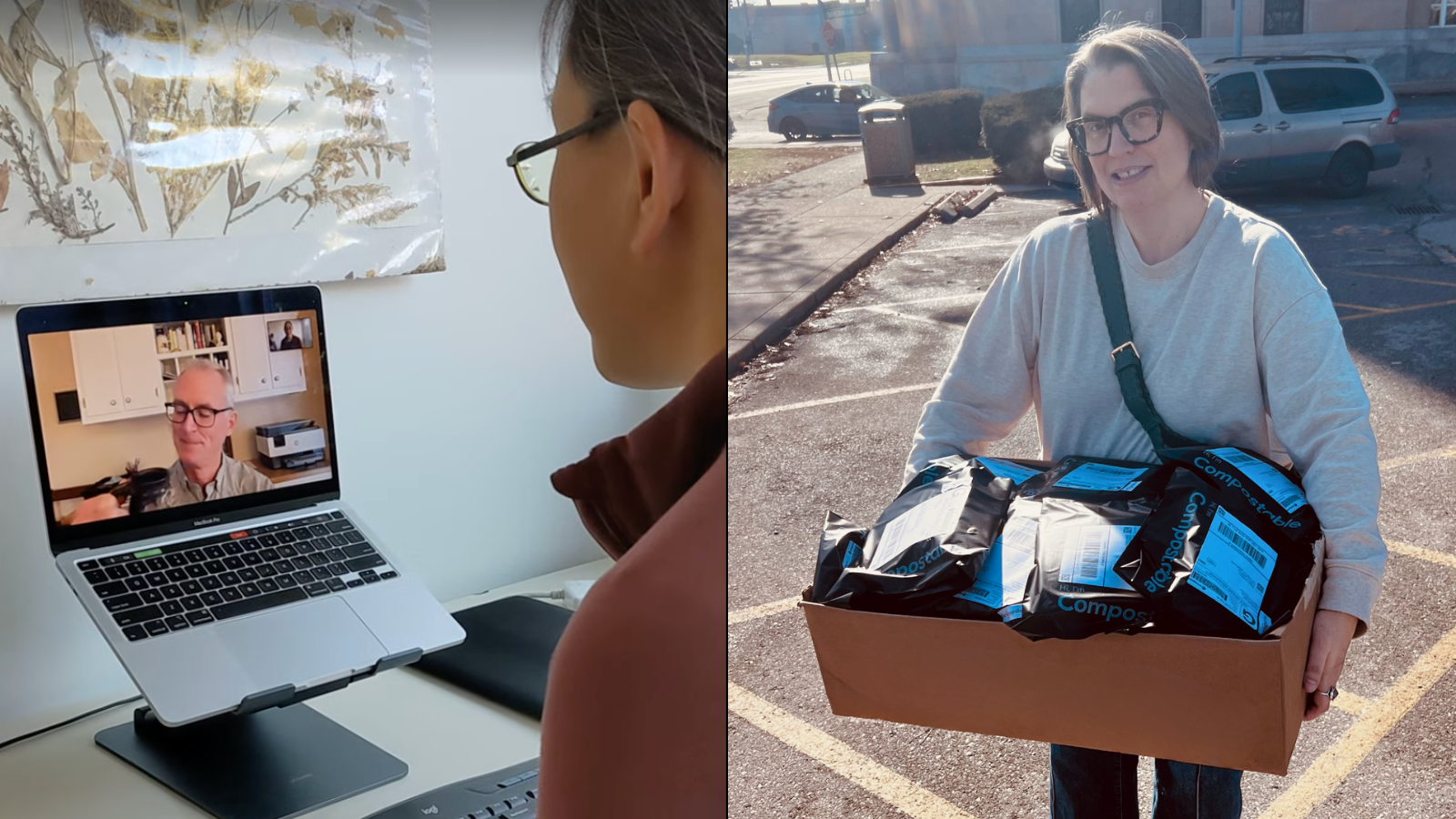
Behind the scenes at republicEn: Outreach Director Wen Lee records a Zoom conversation with Bob Inglis for the organization’s year-end appeal video, while Engagement Director Angela Larck delivers packages to the U.S. Post Office containing “Carbon Tax Advocate” republicEn socks for EcoRight VIPs.
Innovation is happening despite the absence of policy. That innovation would be goosed by effective, bipartisan, durable policy. Calls for that policy must come from the ground up—from conservatives telling their R members of Congress that they want action. It will come when those elected Rs see it in the interest of their states/districts to develop new energy resources. It will come when cracks in the MAGA base signal that it’s safer to speak. Examples:
-
-
- U.S. Rep. Jen Kiggans (R-VA) defending offshore wind in her district.
- U.S. Rep. Buddy Carter (R-GA1) keen on Hyundai succeeding with its massive EV plant in his district.
- South Carolina electeds becoming more aware of the growth of solar panel and battery manufacturing in the state.
- Red state electeds realizing that they’re poised to prosper from the deployment of wind and solar in their states and districts.
-
For climate action to be durable, it must be bipartisan, and the climate conversation must be expanded to include conservatives.
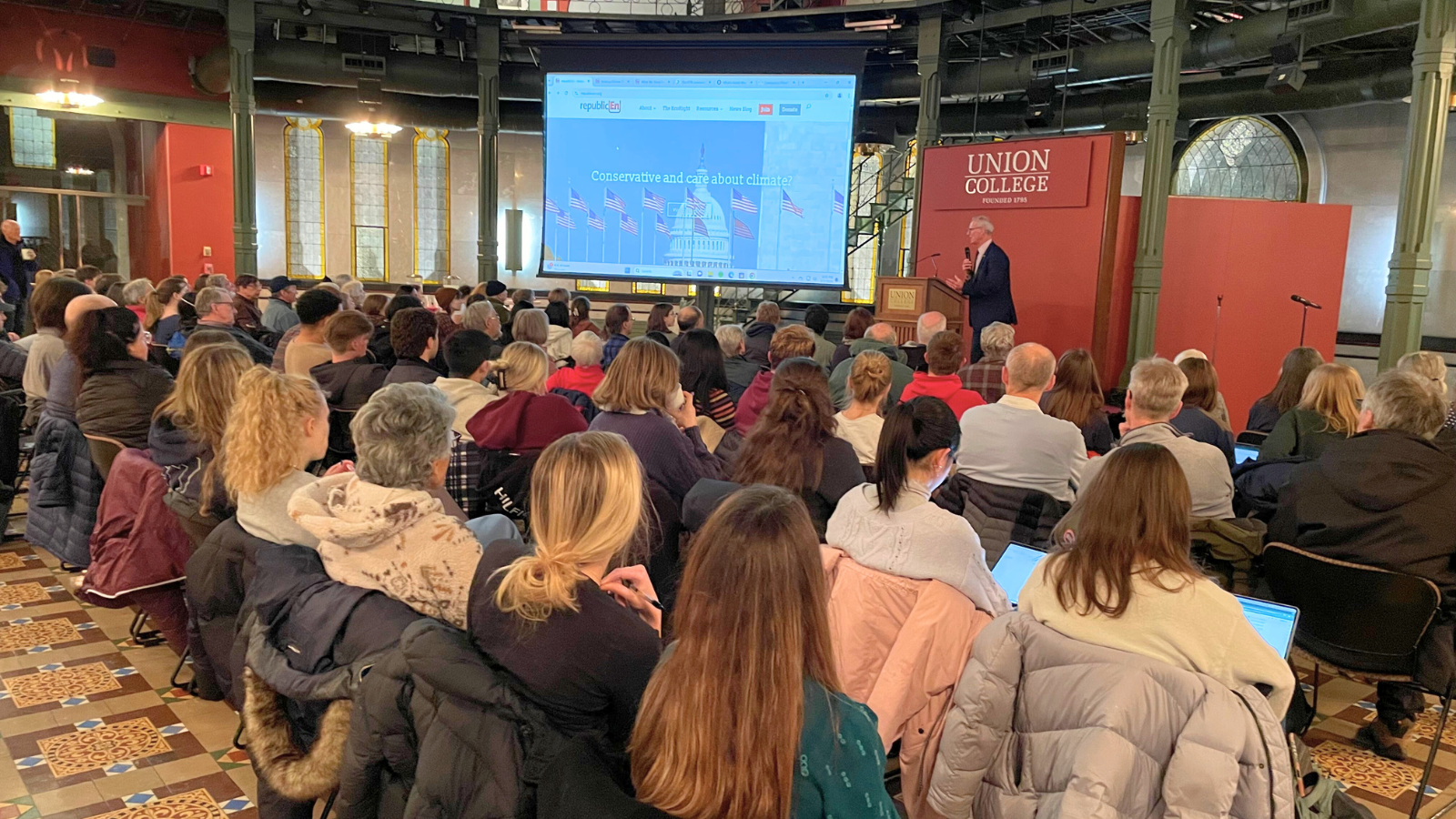
Bob Inglis speaks at Union College, Schenectady, New York, on February 3, 2025. Photo credit: Salil Benegal.
Politicians typically follow; they don’t lead. That’s why someone needs to do what we’re doing. We go to conservatives. We speak to them in the language of conservatism. It usually goes quite well. See, for example, our November 2025 Outlook, which reports on a visit this past fall to the University of Georgia.
With your help, we’re going to be in more places like the University of Georgia in 2026. Working with our EcoRight allies, we aim to win this thing.
Glad to be in it with you,

Bob