
How much does faith shape the way people think about climate stewardship?
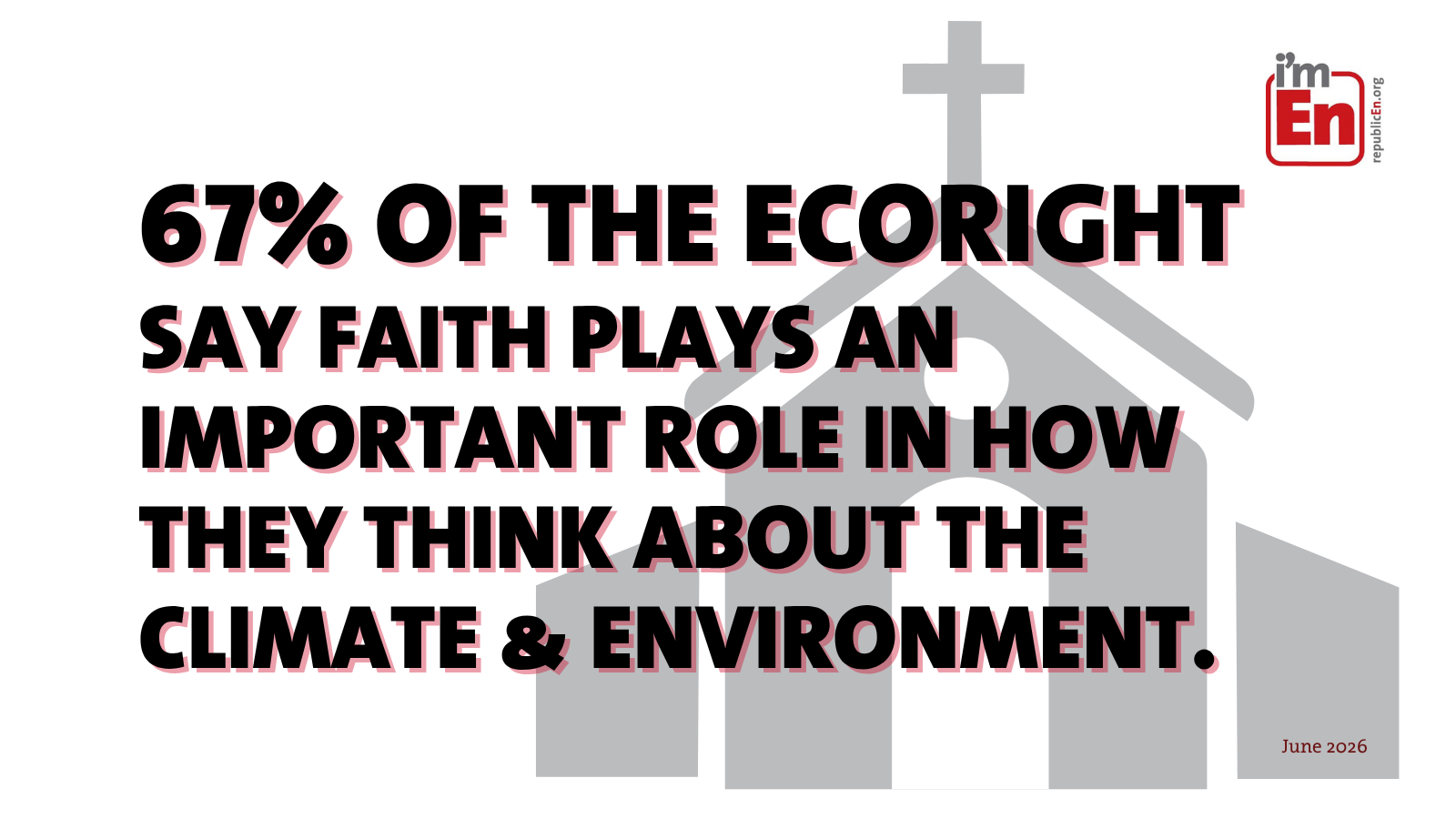
According to a recent republicEn poll, nearly two-thirds of respondents said faith plays an important role in how they think about caring for the climate and environment. Another 14% were neutral, while 19% disagreed.
That finding alone tells a promising story. Faith clearly matters for many people in the EcoRight, but not everyone approaches climate stewardship through a religious lens. Several respondents identified as atheist, agnostic, or not affiliated with a church.
But after reading through the comments, I don’t think that was the most interesting finding.
What stood out was how many people have already made the connection between faith and stewardship. The bigger question wasn’t why they should care. It was what comes next.
What’s the biggest role people of faith should play in addressing climate change?
The results were remarkably close:
-
-
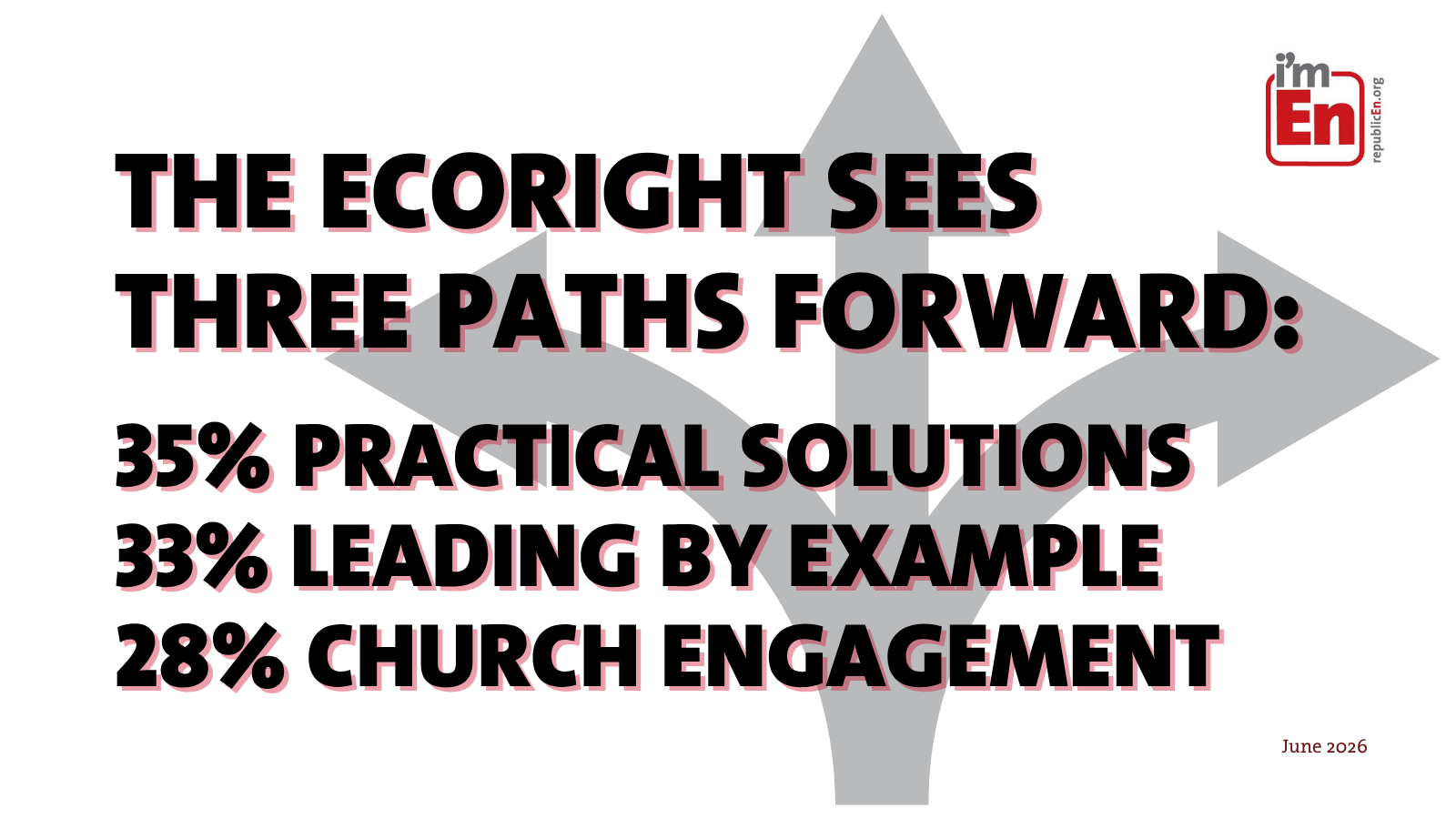
- 35% Advocate for practical, common-sense solutions
- 33% Lead by example through personal actions
- 28% Encourage action within churches and faith communities
-
No single response captured more than 35% of the vote.
What struck me about these results is that respondents weren’t rallying around one strategy. Instead, they pointed to three different but complementary ways people of faith can engage.
Some see stewardship primarily as public leadership and advocacy. Others emphasize personal responsibility and leading by example. Still others view churches and faith communities as important places for conversation and action.
Al L. in Delaware captured this sentiment perfectly:
“The first three choices are equally important.”
Another participant explained that they struggled to choose just one answer because all three approaches matter.
That perspective appeared throughout the comments. Rather than choosing one path, many respondents seemed to see all three as part of a larger stewardship ethic.
Stewardship in Practice
When we asked what would make people more likely to engage their church or faith community on climate and environmental issues, one response stood out.
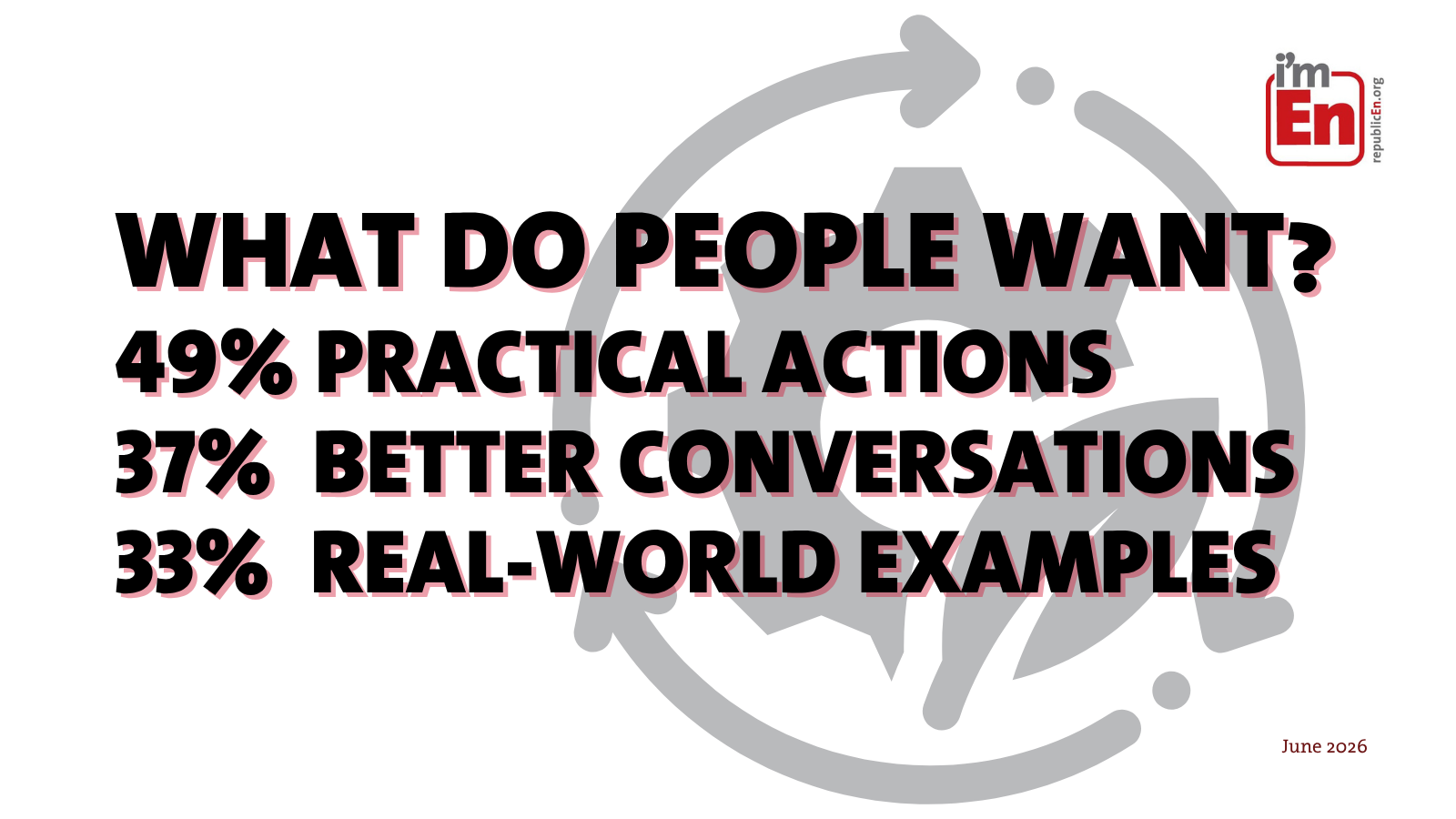
Nearly half (49%) of respondents selected:
Practical actions we can take together locally.
The next most popular responses were guidance on how to talk about climate issues without conflict (37%) and examples from other churches and faith leaders (33%).
The comments helped explain why. Many respondents weren’t speaking hypothetically. They were already doing the work.
Norma M. in Tennessee shared:
“I started a church committee on Creation Care.”
David H., also in Tennessee, wrote:
“I led the energy task force, leading to a 28% drop in power usage mainly by moving to LED lights.”
Others described solar panels on church buildings, Laudato Si’ ministries, and congregations working to reduce their environmental footprint. These stories suggest that for many respondents, stewardship isn’t simply an idea. It’s something they’re already putting into practice.
The Challenge of Talking About Climate in Churches
Another theme emerged quickly from the comments.
Many respondents expressed frustration that climate change has become politically polarized, making it difficult to discuss in faith settings.
Elizabeth F. in California wrote:
“My church shies away from anything political! Climate and the environment shouldn’t be.”
Brian E. in Colorado observed:
“Climate change is an extremely polarizing subject and it shouldn’t be.”
An evangelical respondent described loving their church but finding it difficult to talk about climate change “for fear of causing a rift.”
These comments help explain why the second most popular response (37%) in the poll was:
Guidance on how to talk about it without conflict.
People aren’t just looking for information. They’re looking for ways to have productive conversations.
What this tells us
The results of this poll felt less like “here’s what people believe” and more like “here’s a group of people trying to figure this out.”
For republicEn, that’s an important insight.
The responses suggest that many people have already connected faith and stewardship. The bigger questions are how to put those values into practice, how to have productive conversations about climate change, and how to learn from others who are already doing the work.
As we think about future resources, events, and conversations, those are the areas we’ll continue exploring. Whether that means highlighting examples from churches and faith leaders, sharing practical stewardship ideas, or creating space for respectful dialogue, the poll offers a clearer picture of where people are looking for support.
Rae S. in Indiana offered a simple suggestion:
“The main thing that would make me and others more likely to engage is to offer HOPE.”
I think that’s worth remembering. The comments weren’t filled with people arguing about whether stewardship matters. They were filled with people sharing ideas, challenges, and examples from their own congregations and communities. That’s the kind of conversation republicEn hopes to encourage, and this poll gives us a better sense of how to do it.
Thank you to everyone who participated and shared your thoughts.
Poll answers represent republicEn members across 45 states, plus Washington D.C. California submitted the most responses, followed by Florida. The political leaning of poll takers: 39% claim center, 30% lean right, 24% lean left, and 6% are unsure or prefer not to say.
Four times a year, republicEn seeks understanding by listening to the voices of conservatives who care about climate change.
Here are more shared thoughts and opinions from republicEn members:
-
-
- “As a semi-active Mormon, I think push for change at the region/global level is going to be more effective than local parish level efforts because the messaging and preaching is tighly directed by senior church authorities. The local parish leaders have very little say in what is preached at the pulpit or giving church-approval to environmental and climate change efforts, even though doing so is somewhat congruent with the church’s theology.” – Austin B. in Utah
-
-
-
- “Check out my presentation to Westminster Presbyterian Church talking about our Presbyterians for Carbon Dividends advocacy work” – Bill B. in Michigan
-
-
-
- “While I am not personally a religious person (raised Catholic), I have greatly appreciated faith-based leaders, including Pope Francis and Pope Leo, speaking out about the responsibilities of Catholics to protect our planet and the environment. I believe it is what Jesus would be doing if he were alive today. ” – Shannon O. in New York
-
-
-
- “I am a Quaker, and my community is on board with the need to address climate change. We struggle with financial considerations — should we spend money to become less reliant on fossil fuels, or should we help the disadvantaged in our community? So ways that we can do both without depleting our resources would be helpful.” – Martha C. in Pennsylvania
-
-
-
- Grace Covenant Presbyterian has had a vesper service at Conestee Nature Preserve and led walks there for our members as well. It is a place close to my heart.” – Linda E. in South Carolina
-
-
-
- “While I believe that being a good steward of the climate and earth are Christian values, coming out in favor of a Christian “angle” to AGW wouldn’t be fruitful in my opinion. It’s too controversial.” – James H. in Colorado
-
-
-
- “I am Catholic. There is great support for “caring for creation” from the last five popes in their encyclicals and addresses, but local parishes and dioceses still see acting on these ideals as divisive. I have formed some Laudato Si’ Ministries, but my home parish is not very receptive, while my alma mater’s (UNC) Newman Center is very receptive. The Diocese of Raleigh, NC, has agreed to let a committee of us form an action plan to publish with our Bishop’s signature, which is a big deal. Hoping for the best, but it is a difficult thing and not many Catholics I know understand climate change or the moral call to care for creation and, in so doing, care for the poor. Thank you for your work at RepublicEn. I think this is very important.” – Monet J. in North Carolina
-
-
-
- “Personally, I am not religious, but I support anyone taking climate action in a way that resonates with them, including within a faith community.” – David M. in Idaho
-
-
-
- “The environment is very important to me. The well-being of future generations depends on our creating a healthier environment. I’m not going to say, “Oh, the world is coming to an end, so we should just ignore this disaster.” We don’t know when the world will end. We need to protect what we have and act as stewards of the earth. Adam had one job – take care of the garden.” – Nora S. in New York
-
-
-
- “For me, it was always striking that human beings were designated as stewards of the earth in the *opening words of the Bible.* And God’s creation is so unbelievably rich, complex, and magnificent. Like Bob Inglis, I’ve always found that science and faith complement one another. Many scientists come to know God through their research and regardless, their research enables the rest of us to appreciate the incredible majesty and creativity of God. (Sooner or later, scientists who don’t know God will meet Him, and the rest is up to them, not our affair:).” – Serena V. in Pennsylvania
-